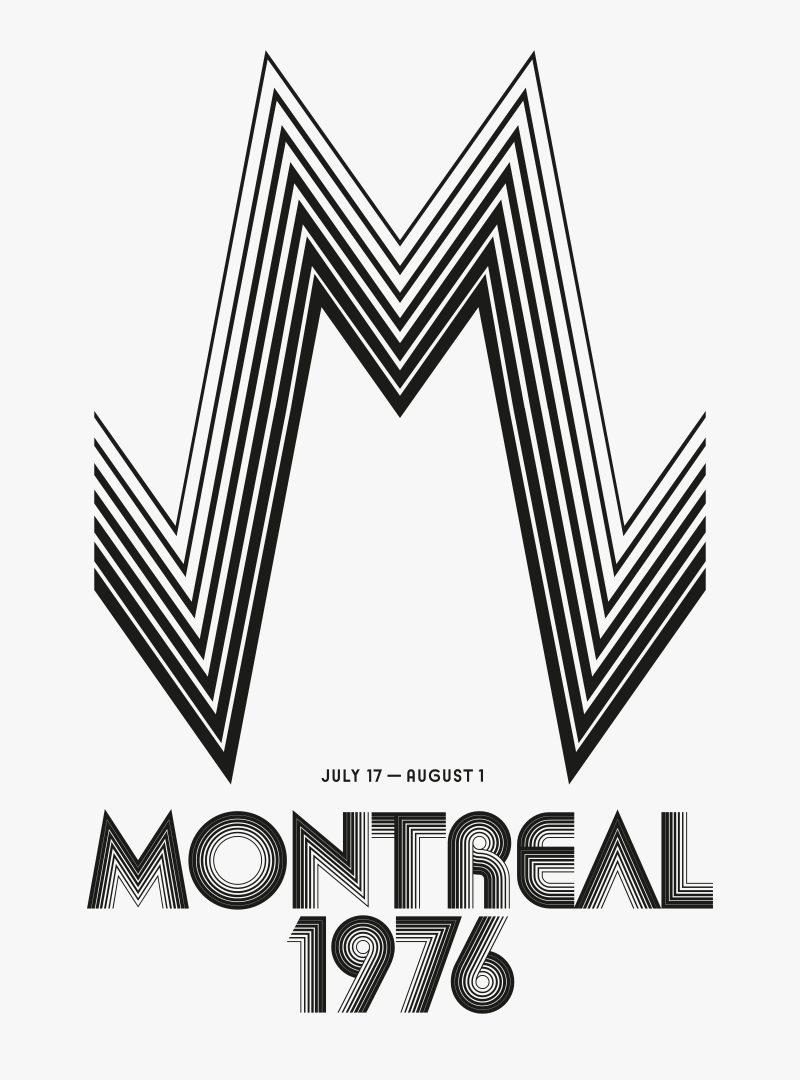
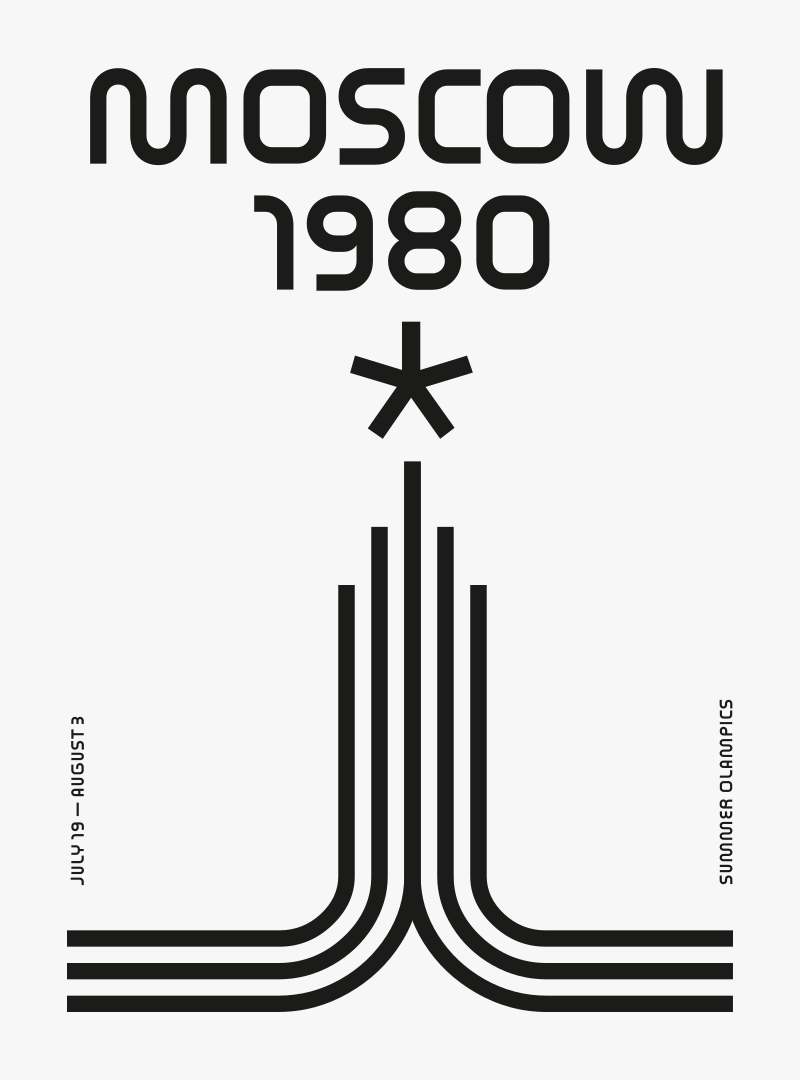
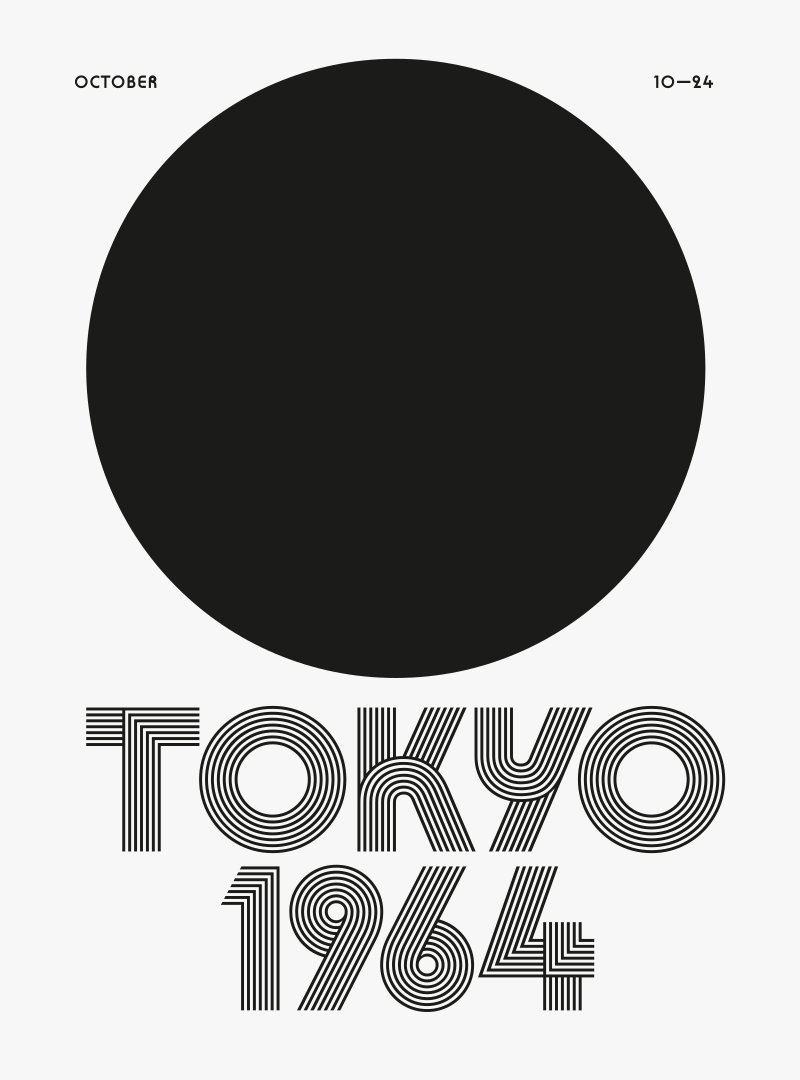
Music clubs had become laboratories for multisensory experiences, engaging the eyes, ears and entire body. By the second half of the ’70s, smoke machines were a nightclub staple, giving flashing lights a three-dimensional presence. Multicoloured beams cut through the haze, while motorised spotlights circled the room like helicopters, scanning floors and walls and writing messages in a single stroke. These movements – awkward, not quite graceful, yet precise – are echoed in Retroduktor’s letterforms.

The disco scene became a safe space for the gay community and a platform for sexual liberation. Gloria Gaynor’s 1978 hit “I Will Survive” expressed female strength and became an anthem of the gay scene. On the dance floor, moving beams did more than dazzle: they offered a path through darkness and confusion. Through Retroduktor, that light says: “Come with me. You don’t have to worry. I’ll show you what’s just ahead.”

BC Retroduktor celebrates Akilines by Akihiko Seki, originally issued by ITC in 1970 and released by Mecanorma under the name Akilines three years later. While this familiar design has inspired many revivals, our interpretation puts variable font technology at its heart. An ambitious achievement in variable type design and the culmination of Viktor’s years of work, the family is built from 95 masters. It offers twenty-four carefully selected static styles in OpenType format and four variable styles, allowing continuous transitions through a spectrum of line treatments. This flexibility makes it particularly suited to motion graphics and advertising, bringing movement back into the letterforms.

It is an extraordinary achievement in animated typography, bringing letterforms to life through movement.

  • Design: Viktor Mizera
  • Number of fonts in a family: 7 (Original, Centre Light, Reversed, Neutral 150, Neutral 400, Centre Bold, Neutral 700)
  • Number of glyphs per font:
  • Release date: 2020
114 Languages
Afar, Afrikaans, Albanian, Aromanian, Aymara, Basque, Bemba, Bislama, Bosnian, Breton, Catalan, Chamorro, Cheyenne, Chichewa, Chuukese, Cofán, Cornish, Croatian, Czech, Danish, Dutch, English, Esperanto, Estonian, Faroese, Fijian, Finnish, French, Frisian, Friulian, Galician, Ganda, German, Gikuyu, Greenlandic, Guaraní, Gwich’in, Haitian, Hawaiian, Hungarian, Icelandic, Ido, Igbo, Indonesian, Interlingua, Irish Gaelic, Italian, Javanese, Kashubian, Kinyarwanda, Kiribati, Kirundi, Kituba , Kurdish (Latin), Ladin, Latvian, Lithuanian, Luxemburgish, Malagasy, Malay, Maltese, Manx, Māori, Náhuatl, Nauruan, Ndebele (Northern), Ndebele (Southern), Norfuk , Norn, Norwegian (Bokmål), Occitan, Palauan, Papiamento, Pinyin, Polish, Quechua, Rhaeto-Romanic, Romani, Romanian, Sámi (Inari), Sámi (Lule), Sámi (Northern), Sámi (Southern), Samoan, Sango, Sanskrit transliteration, Sardinian, Scottish Gaelic, Serbian (Cyrillic), Seychelles Creole, Shona, Silesian, Slovak, Slovene, Somali (Latin), Sotho, Swahili, Swati, Swedish, Tagalog (Filipino), Tahitian, Tetum, Tok Pisin, Tokelauan, Tongan, Tsonga, Tswana, Turkish, Tuvalu , Veps, Welsh, Wolof, Xhosa, Zulu

Styles

AKI Neutral 150
AKI Neutral 400
AKI Neutral 700
AKI Original
AKI Reversed
AKI Centre Light
AKI Centre Bold
NAMI Neutral 150
NAMI Neutral 400
NAMI Neutral 700
NAMI Thin Pos
NAMI Thin Rev
NAMI Regular
NAMI Regular Rev
NAMI Bold
NAMI Bold Rev
KITT Neutral 100
KITT Neutral 400
KITT Neutral 700
KITT Positive 0
KITT Negative 0
KITT Positive 1
KITT Positive 2
KITT Positive 3
KITT Positive 4
KITT Positive 5
KITT Positive 6
KITT Positive 7
KITT Negative 1
KITT Negative 2
KITT Negative 3
KITT Negative 4
KITT Negative 5
KITT Negative 6
KITT Negative 7
SOLID Hairline
SOLID Light
SOLID Normal
SOLID Regular
SOLID DemiBold
SOLID Bold
SOLID Extrabold

Specimen

discotronic
MANHATTAN
Get your groove on
Funky
Four-on-the-floor
Lambrusco
It was a time when music clubs had become laboratories for multisensory experiences.
The disco scene at the time had become a safe space where the gay community could find a sense of self-confidence.
It was also a platform for a new sexual liberation. Gloria Gaynor’s megahit “I Will Survive” was both an expression of female power and an anthem of the gay scene in 1978.


Features

Slow Comfortable

Screw Up Against

the Wall


Glyphs


In use